


WordPress
Agents fix titles, meta, content and schema on your live WordPress site. You stay in control. Every change to an existing page keeps a copy of the original, and one click puts it back.

Each local area page used to take us half a day to create and optimize.
With SEOmatic, we can create hundreds of pages in the same time, which helps our clients make the best use of their budget.
It's transformed how we deliver scalable SEO solutions.

Will Hawkins
Marketing Director, Digi-Business UK
Agents read your Search Console data, do the work, and prove what actually moved. You decide what ships.
14-Day Free Trial. $1 today, credited to your first payment.
Agents write your blog posts, rewrite the ones already published, and fix the titles and descriptions costing you clicks. By default, you approve each change before SEOmatic writes it.


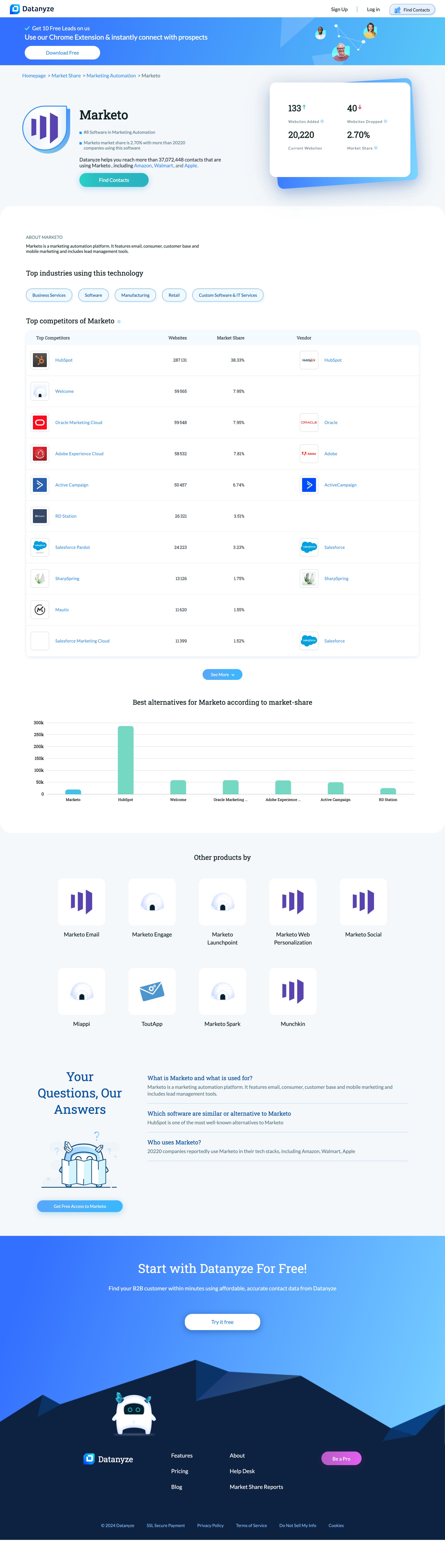
SEOmatic connects to HubSpot in one click. Agents write new blog posts, rewrite the ones you already published, and fix the SEO settings of your landing and site pages. Nothing is written until you approve it.
All integrations are included in every plan. Plans start at $99/month. See pricing.
A HubSpot account with Content Hub (formerly CMS Hub) and permission to approve apps for it. Connecting happens on HubSpot's own consent page; an existing private app with the content scope also works.
Visit our blog to learn more about programmatic SEO and how it can help your business generate more traffic, leads, and sales.
SEOmatic connects to your HubSpot account in one click, then works on the posts and pages you already have.
Step 1: In SEOmatic, go to Connections, select HubSpot and click Connect with HubSpot.
Step 2: Approve access on HubSpot's own consent page. SEOmatic loads your blogs and selects one for you if you only have one. (Already have a private app with the content scope? You can paste its token instead. HubSpot is switching off the creation of new legacy private apps.)
Step 3: Agents read your Search Console data, find the posts and pages losing clicks they should be winning, and propose the fixes with the reasoning attached.
Step 4: You approve what you want. Approved work is written to HubSpot, logged as a diff you can read, and undone in one click if you change your mind.
Full blog posts with titles, HTML content, excerpts, featured images, tags and author, plus rewrites of what is already live.
On a landing or site page with unpublished edits from your team, the agent leaves the page alone rather than publishing their draft along with its change.
The agent arrives switched off and starts in approval mode. It acts on its own only where you allow it.
SEOmatic reads the real post back from HubSpot, so the before and after you approve is the live content, not a guess.
Any change rolls back to its previous value. Low-risk edits that cost you traffic revert on their own.
Every change is read back from HubSpot before it counts as applied. If pushing a page live fails, its draft is reset so nothing is left half done.
Posts are filed against your existing HubSpot tags and blog authors, so author signals stay intact.
HubSpot takes standard HTML, so content goes across as written rather than through a lossy format conversion.
If your portal runs several blogs, pick the one to work in. With only one, SEOmatic selects it for you.
Agents work through HubSpot's own content API, and nothing is written until you approve it. Approved edits to a blog post update the live post directly; on landing and site pages the change goes through the page's draft and is pushed live, and a page with unpublished edits from your team is left alone.
Every industry and persona you sell into searches differently. Agents check which of those segments have real search demand behind them, write a post for each, and file it against your existing HubSpot tags and authors so it lands in the right place.

One post per use case is a lot of writing nobody has time for. Agents cover the verticals you serve, then keep watching how each post performs and propose a rewrite when one starts slipping.
Comparison and alternative posts catch people close to deciding, which is exactly the traffic your HubSpot analytics can follow through to a deal. Agents write them and revisit them as the competitive picture shifts.
Which parts of my HubSpot site can agents edit?
Your blog, fully: agents write new posts and rewrite the titles, descriptions and content of ones already published. On landing pages and site pages, agents set the SEO title, meta description, canonical, noindex and structured data; the page content and layout stay yours, since those are built from HubSpot templates. If someone on your team has unpublished edits waiting on a page, the agent leaves it alone rather than publishing their draft along with its change.
Does a change go straight onto my live page?
Only after you approve it. SEOmatic's approval step is on by default, so nothing is written until you say yes. Once approved, an edit to a blog post updates the live post directly. On landing and site pages the change goes through the page's draft and is pushed live, and if your team has unpublished edits waiting on that page, the agent leaves it alone instead of publishing their draft.
Can agents set canonical tags, noindex or schema markup?
Yes, on blog posts, landing pages and site pages. The canonical goes into HubSpot's own canonical field, and noindex and structured data go into the page's head code inside a clearly marked block, so any code your team already put there is never touched and an undo removes exactly what the agent added. Every change is read back before it counts as applied. Other robots rules, such as nofollow, still come to you as written instructions.
What if a change does not go through?
You are told. Every change is read back from HubSpot before it counts as applied, so a value HubSpot did not keep is reported as not applied instead of marked done. On landing and site pages, if pushing the draft live fails, SEOmatic resets the draft so your page is not left with a half-finished change waiting in it.
What stops it doing the things other AI SEO tools get accused of?
Those complaints are specific, so the answers are too. It will not quietly replace metadata you were happy with: you see the before and after and approve it. It will not set pages to noindex behind your back: a noindex is a change you approve like any other. It will not strip anything if you disconnect. And it will not claw back its work if you cancel, because everything it wrote is an ordinary post in your own HubSpot portal.
What if the agent makes a change I do not like?
Every edit stores the previous values before it writes, so a change goes back to what it was in one click. The agent starts in approval mode, so by default you see each change before it is applied, and posts you mark as protected keep waiting for your yes. One honest limit: restoring a field that was previously empty is handed to you rather than applied automatically, because HubSpot treats an empty value as leave alone rather than clear.
What do I need to connect?
Nothing, in most cases: click Connect with HubSpot and approve access on HubSpot's consent page, and SEOmatic handles the rest. If you already have a Private App with the content scope, you can paste its access token instead; SEOmatic validates it as you type. HubSpot is switching off the creation of new legacy private apps (September 28, 2026 for new accounts, October 26, 2026 for existing ones), so new setups should use Connect with HubSpot.
What happens to the work if I cancel?
It stays yours. Agents publish into your own HubSpot portal, so the posts and edits are simply part of it. Nothing reverts or disappears if you stop paying.
See what agents can do on the other platforms SEOmatic connects to.
Agents fix titles, meta, content and schema on your live WordPress site. You stay in control. Every change to an existing page keeps a copy of the original, and one click puts it back.

Agents work through your CMS collections item by item, fixing the SEO nobody has time to maintain. You stay in control.

Agents write your blog, build the collection and landing pages you are missing, and repair the pages that are slipping. You decide what goes live.

Agents write and refresh your posts, and set the canonical tags and schema most platforms will not let them touch. You decide what goes live.

Agents write and refresh your posts and pages, connected in one click with your Google account. You decide what goes live.

Agents write and refresh your Wix blog, and fix the meta on posts already published. You stay in control of what ships.